
Vineyards require infrastructure that lasts a long time. Between soil moisture, irrigation, crop loads, and constant tension from trellis wires, vineyard posts take serious abuse year after year.
That is why CCA pressure-treated wood posts remain one of the most reliable products for vineyard trellis systems support.
Role of Treated Posts in a Vineyard
In a vineyard, posts serve two primary structural roles: line posts and end & corner posts, also known as anchor posts. Their role differs, but together they form the backbone of the trellis system.
First, line posts run along each individual vineyard row. They support the trellis smooth wire that holds up the vines, but their main role is to keep training wires at consistent heights and maintain row alignment and canopy structure. The post diameters usually range from 3.5” to 5” and spaced around every 15-25 feet apart. Vineyards typically use 8-foot posts.
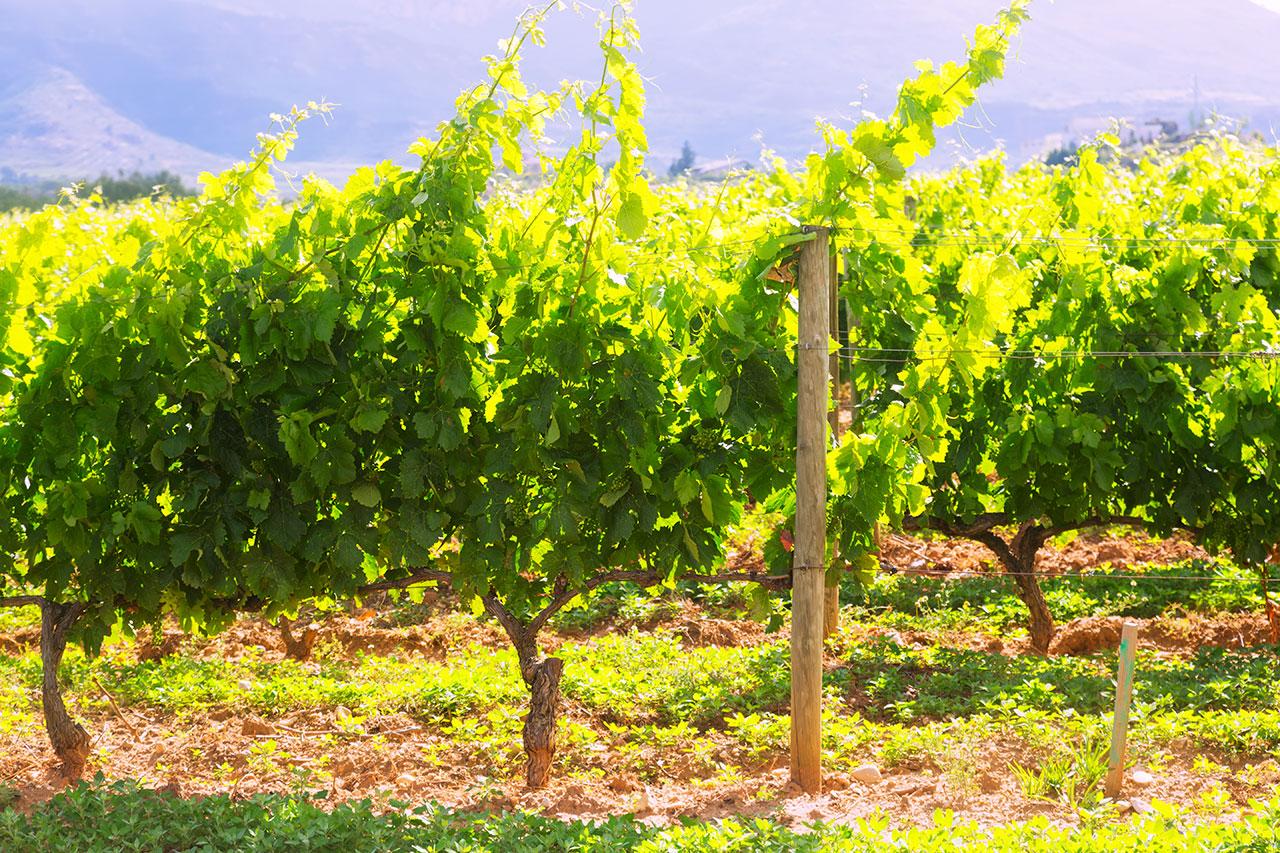
Next, anchor posts are the posts that anchor the entire system and hold the tension from the stretched wire. These posts require a larger diameter (5”-8”) compared to the line posts because of the amount of pressure they are holding. They prevent row collapse or wire sagging and are usually installed deeper into the ground for more stability. Anchor posts are used at any change in direction, row ends, or corners.
Why Ground Contact Posts Matters
Vineyard trellis posts are installed directly into the soil, which puts them into what the American Wood Protection Association classifies as ground-contact exposure. This type of environment exposure includes constant moisture, fungal decay organisms, soil microbes and other insects. Posts that are untreated will rapidly decay from the bottom up within just a few years because there is no chemical preservative to resist these types of exposures. Posts that start to fail can cause entire rows to collapse, leading to not only more repair costs but also an unsuccessful harvest. That is why in-ground contact, specifically CCA treatment is ideal for vineyard trellis systems. CCA protects against rot, fungal decay, and other potential infestations for decades.
Comparing CCA-Treated Wood to Alternatives
Certain vineyards consider steel or composite systems. While those materials have their place, treated wood offers key benefits:
|
CCA-Treated Wood |
Steel |
|
|
Overall, treated vineyard posts provide natural strength and flexibility. Unlike some alternatives, they absorb shock loads rather than transferring stress abruptly through the system, while still being cost-efficient and long-lasting.
FAQs
1. What types of bracing systems are used with end and corner posts for vineyards?
To handle high tension loads, end and corner posts are reinforced with bracing systems such as:
- H-brace: Two vertical posts connected by a horizontal brace and tension wire
- Diagonal brace: A slanted support post or wire
- Deadman anchor: A buried anchor connected to the post with wire
2. How long do CCA-treated vineyard posts last?
When properly dried, treated, and installed, CCA-treated posts can last 20-40 years or more, depending on soil conditions, climate, and load stress.
3. What type of wire is used for vineyard trellis systems?
High-tensile smooth wire is the most commonly used wire for vineyards. It is the standard because it delivers the strength, durability, and efficiency needed for modern trellis systems. It is typically corrosion resistant, while still allowing flexibility, minimal sag overtime, and has a smooth surface which reduces damage to vines.
For more information on building a trellis system, Michigan State University has a great article called “Engineering a Modern Vineyard Trellis” that breaks down the materials, how to build it, and what makes a system successful.
Smooth Wire for Vineyard Trellis Systems
When it comes to the stability of your trellis, high-tensile smooth wire is the gold standard in vineyards because it provides the clean, consistent support vines need to grow and produce effectively. Unlike barbed or rough wire, smooth wire minimizes abrasion, helping protect canes and shoots as they’re trained along the line. The strength and flexibility this wire provides, allows it to handle tension across long runs while still being easy to install and adjust. With the combination of treated wood posts and high-tensile smooth wire in a vineyard setting, means better canopy management, improved airflow and sunlight exposure, and healthier vines with more consistent yields.
Conclusion
At West Branch Wood Treating Sales, we provide both vineyard trellis posts as well as high-tensile smooth wire to help your vineyard be successful. From CCA-treated line and anchor posts to reliable wire that keeps your canopy structured and supported, our materials are built to perform in real vineyard conditions.
Investing in the correct foundation from the start means less replacements, lower maintenance costs, and a trellis system that stays strong season after season.
Looking for More Information on Our Products?
Reach Out and Experience the Difference
with West Branch Wood Treating Sales.
Contact us today for a free estimate or any additional inquiries.