
When investing in your next project, choosing the right wood treatment is critical to the longevity of your fence, posts, or any outdoor structure. Not all pressure-treated wood is the same, and knowing the differences between CCA, creosote, and MCQ/MCA can save you years of maintenance and replacement costs.
This guide will break down CCA vs. creosote vs. MCQ vs. MCA to help fence contractors, farmers, and others determine the best wood treatment for round wood posts, fencing, and ground-contact applications.
Quick Answer: Which Wood Treatment Is Best?
CCA-treated wood is the golden standard for round wood treated posts and ground-contact applications because it offers deep preservative penetration, longevity against rot and insects, and a proven service life of 25-50+ years.
Creosote is best suited for heavy industrial uses like railroad ties and utility poles. MCQ or MCA is used for lighter residential and above-ground projects.
Bottom line: CCA-treated round wood posts deliver the best performance and value for agricultural use, fencing, and other long-term structural use.
What is CCA (Chromated Copper Arsenate)?
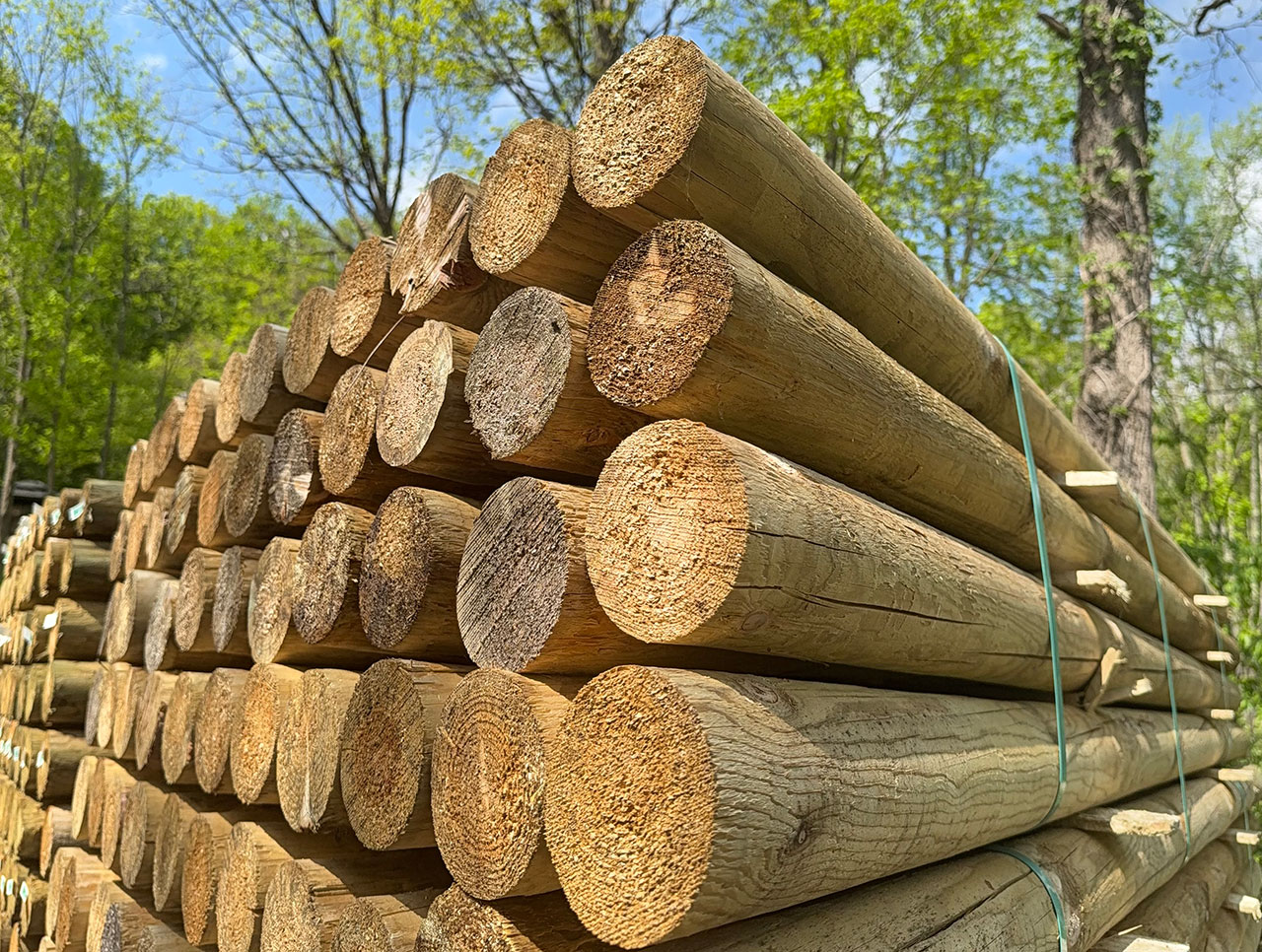
CCA (Chromated Copper Arsenate) is a pressure-applied wood preservative that has been around the industry for decades, and used in outdoor environments to make wood last longer. The treatment process forces protective compounds deep into the wood fibers, making it highly resistant to: rot, decay, fungal growth, and insects.
Why is CCA Ideal For Round Wood Posts?
CCA is ideal for these posts because this preservative is able to penetrate evenly to make it particularly effective for round wood posts, where structural integrity and below-ground performance are critical. CCA is specifically made for in-ground contact use because it resists moisture, meaning it will not give out for decades when it is in the wet soil. When it first is treated, they will look green, however overtime, the color will turn into a clean, natural appearance.
Common applications include:
- Agricultural fencing
- Vineyard and orchard posts
- Farm and utility structures
- Marina dock poles
- Solar field perimeter fencing
- High/game fence
Key benefits of CCA-treated wood posts:
- Superior ground-contact performance
- Long life-span (25-50+ years)
- Proven results
- Great value
What is Creosote?
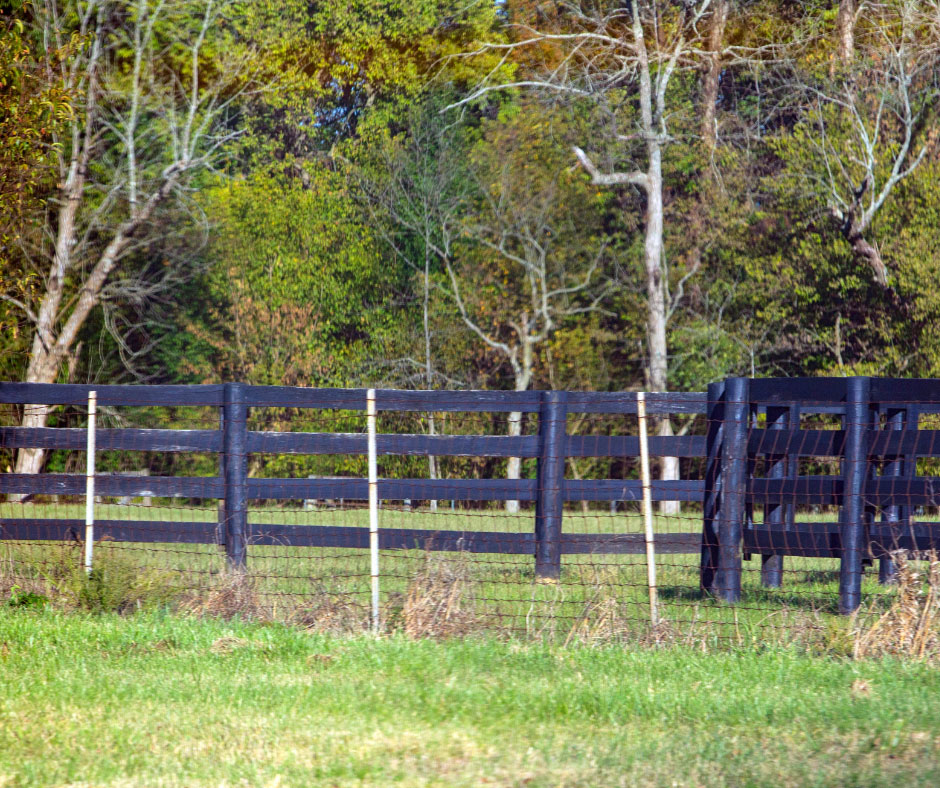
Creosote is an oil-based preservative derived from coal tar and has been used for over a century. It is most commonly associated with railroad ties, marine pilings, and utility poles. Additionally, creosote is the traditional equestrian fence style characterized by black or dark-finished posts and rails, a look historically associated with this type of treatment but now also achieved using painted or stained CCA-treated wood. However, it is restricted in the U.S. to industrial applications under EPA regulations, but it is still used in some fencing projects due to legacy specifications and replacement of existing creosote-treated structures.
- Great resistance to decay and insects
- Performs well in wet or marine environments
- Long service life
- Strong odor and oily residue
- Dark appearance
- Limited to industrial use, high restrictions under EPA regulations
- Cannot be used in many grower operations/trellis systems
What is MCQ (Micronized Copper Quaternary)?
MCQ (Micronized Copper Quaternary) is a newer, copper-based wood preservative commonly used in residential construction. It is mainly used for decking and other above-ground or limited-ground contact applications. It has a shorter lifespan in ground contact due to its shallower penetration than CCA and usually a higher material cost in many markets. This treated wood will usually last between 15-20 years. Overall, MCQ is often selected for appearance or residential code compliance, but it is not designed for long-term structural ground-contact performance.
What Is MCA (Micronized Copper Azole)?
MCA (Micronized Copper Azole) is a modern, copper-based wood preservative similar to MCQ, but it uses azole compounds instead of quaternary ammonium as the co-biocide. Like MCQ, MCA relies on micronized copper particles to protect wood from rot and insect attack and is most commonly used in residential and light commercial applications such as decking and above-ground structures. While MCA offers a cleaner appearance and good performance for non-structural uses, it typically does not achieve the same depth of penetration or long-term durability in demanding ground-contact applications as CCA-treated round wood posts.
Best Wood Treatment by Application:
- Best for round wood posts: CCA
- Best for agricultural fencing: CCA
- Best for industrial poles and ties: Creosote
- Best for residential decks: MCQ, MCA
- Best for long-term in-ground contact: CCA
Frequently Asked Questions (FAQ)
Is CCA-treated wood safe for outdoor use?
Yes.CCA-treated wood has been safely used for decades in agricultural, industrial, and commercial applications when installed according to best practices.
Which wood treatment lasts longest in ground contact?
CCA and creosote offer the longest service life in ground contact. For fencing and posts, CCA is preferred due to easier handling and versatility.
MCQ or MCA can be used for light residential fencing, but it generally does not match the longevity or performance of CCA in demanding ground-contact environments. The fence will not last as long, creating more maintenance and replacement costs.
Why are round wood posts commonly CCA treated?
CCA penetrates deeply and evenly into round wood fibers, making it ideal for structural strength, decay resistance, and long-term performance below ground.
Why Many Professionals Choose CCA-Treated Wood Posts
While newer treatments exist, CCA continues to be the preferred choice for professionals who require reliability, durability, and proven performance. Its ability to protect wood below ground, where failure starts, sets it apart from alternative treatments.
For projects where longevity, strength, and value matter, CCA-treated round wood posts remain one of the smartest investments available.
Looking for Long-Lasting CCA-Treated Round Wood Posts?
As a CCA-treated round wood posts manufacturer, we supply high-quality posts engineered for agriculture, fencing, and structural use. Our posts provide the performance, durability, and longevity needed for every project.
Contact us today to learn more about specifications, availability, and custom treatment options.
Looking for More Information on Our Products?
Reach Out and Experience the Difference
with West Branch Wood Treating Sales.
Contact us today for a free estimate or any additional inquiries.